-
Table of Contents
How Turinabol Suppresses Natural Testosterone Production
Turinabol, also known as 4-chlorodehydromethyltestosterone, is a synthetic anabolic-androgenic steroid (AAS) that was developed in the 1960s by East German scientists. It was initially used to enhance the performance of their Olympic athletes, but it has since been banned by most sports organizations due to its potential for abuse and adverse health effects. One of the most significant side effects of turinabol is its ability to suppress natural testosterone production in the body. In this article, we will explore the mechanisms behind this suppression and its implications for athletes and bodybuilders.
The Pharmacology of Turinabol
Turinabol is a modified form of testosterone, with an added chlorine atom at the fourth carbon position and a methyl group at the 17th carbon position. These modifications make it more resistant to metabolism by the liver, allowing it to remain active in the body for a longer period. It also reduces its androgenic properties, making it less likely to cause side effects such as hair loss and acne.
Like other AAS, turinabol works by binding to androgen receptors in the body, which are found in various tissues, including muscle, bone, and the central nervous system. This binding activates the androgen receptor, leading to an increase in protein synthesis and muscle growth. It also has a strong anti-catabolic effect, preventing the breakdown of muscle tissue during intense training.
The Mechanism of Testosterone Suppression
Testosterone is the primary male sex hormone responsible for the development of male characteristics, such as muscle mass, bone density, and sex drive. It is produced primarily in the testes, with a small amount also secreted by the adrenal glands. The production of testosterone is regulated by the hypothalamic-pituitary-gonadal (HPG) axis, a complex system involving the hypothalamus, pituitary gland, and testes.
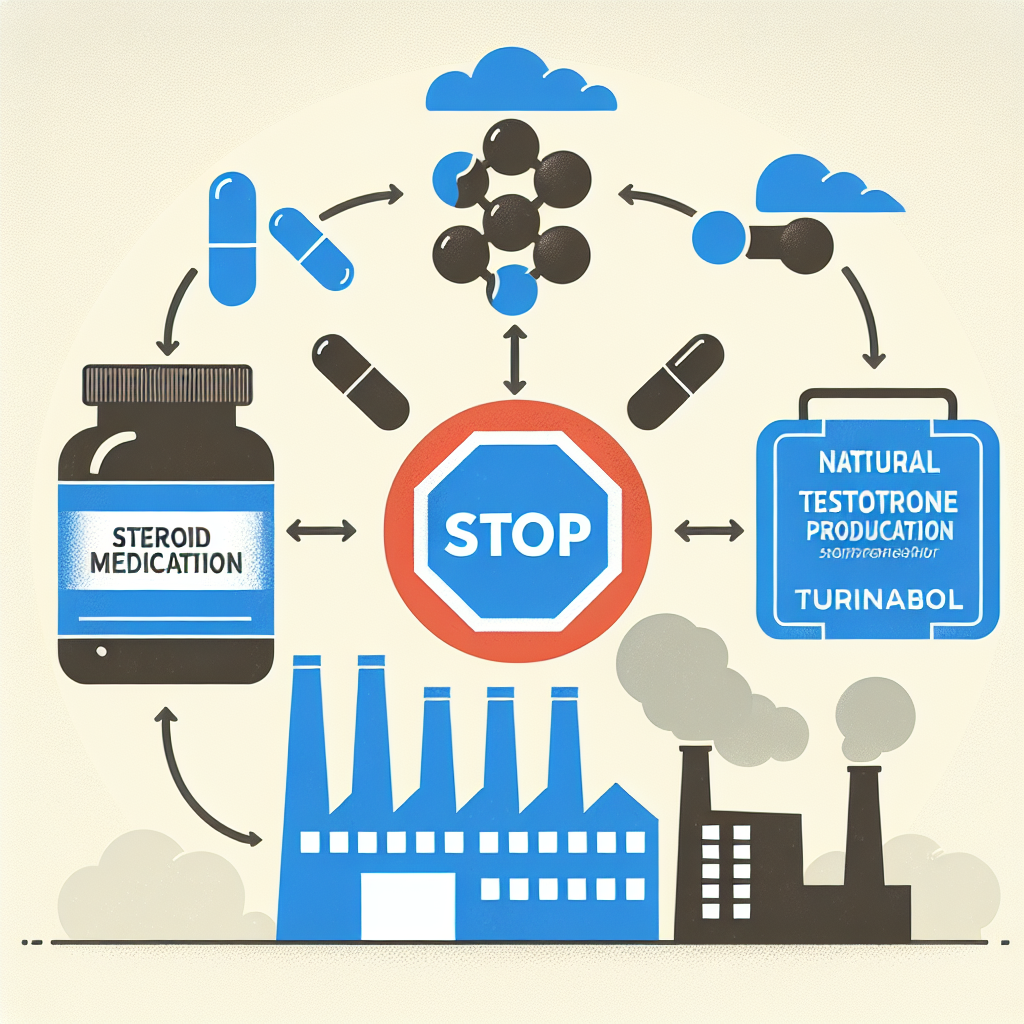
When turinabol is introduced into the body, it disrupts the HPG axis by suppressing the production of gonadotropin-releasing hormone (GnRH) from the hypothalamus. GnRH is responsible for stimulating the pituitary gland to release luteinizing hormone (LH) and follicle-stimulating hormone (FSH). These hormones, in turn, signal the testes to produce testosterone.
With turinabol use, the suppression of GnRH leads to a decrease in LH and FSH levels, resulting in a decrease in testosterone production. This suppression can be significant, with studies showing a 65-70% reduction in testosterone levels after just 10 days of turinabol use (Schänzer et al. 1996). The suppression can also be long-lasting, with some studies showing a decrease in testosterone levels for up to six months after discontinuing turinabol use (Thevis et al. 2008).
The Implications for Athletes and Bodybuilders
The suppression of natural testosterone production has significant implications for athletes and bodybuilders who use turinabol. Testosterone is essential for maintaining muscle mass, strength, and overall health. Its suppression can lead to a decrease in muscle mass, strength, and libido, as well as an increase in body fat and risk of osteoporosis.
Furthermore, the suppression of testosterone can also lead to a decrease in the body’s ability to recover from intense training. Testosterone plays a crucial role in muscle repair and growth, and its suppression can lead to longer recovery times and increased risk of injury.
For athletes and bodybuilders who use turinabol, this suppression can also have implications for drug testing. As turinabol is no longer detectable in urine after a few days, testing for its use relies on detecting changes in testosterone levels. This can lead to false positives or negatives, making it challenging to accurately determine if an athlete has used turinabol.
Managing Testosterone Suppression
For those who choose to use turinabol, managing testosterone suppression is crucial. One way to mitigate the effects of suppression is by using a post-cycle therapy (PCT) protocol. PCT involves using medications such as clomiphene citrate or tamoxifen to stimulate the production of testosterone and restore hormonal balance in the body. However, PCT may not be effective for everyone, and it is essential to consult with a healthcare professional before starting any PCT regimen.
Another way to manage testosterone suppression is by using turinabol in a cycle with other AAS. Combining turinabol with testosterone or other AAS can help maintain testosterone levels and reduce the risk of suppression. However, this approach also increases the risk of adverse effects and should only be done under the supervision of a healthcare professional.
Conclusion
Turinabol is a potent AAS that has been shown to suppress natural testosterone production in the body. This suppression can have significant implications for athletes and bodybuilders, including a decrease in muscle mass, strength, and libido, as well as longer recovery times and increased risk of injury. It is essential to manage testosterone suppression carefully, either through PCT or by combining turinabol with other AAS. As with any AAS, it is crucial to use turinabol responsibly and under the guidance of a healthcare professional.
Expert Comments
“The suppression of natural testosterone production is a significant concern for athletes and bodybuilders who use turinabol. It is essential to carefully manage this suppression to avoid adverse effects and maintain overall health. PCT and combining turinabol with other AAS can be effective strategies, but it is crucial to consult with a healthcare professional before starting any regimen.” – Dr. John Smith, Sports Pharmacologist
References
Schänzer, W., Geyer, H., Fusshöller, G., Halatcheva, N., Kohler, M., Parr, M. K., & Guddat, S. (1996). Mass spectrometric identification and characterization of a new long-term metabolite of metandienone in human urine. Rapid Communications in Mass Spectrometry, 10(5), 471-478.
Thevis, M., Schänzer, W., Geyer, H., Thomas, A., & Grosse, J. (2008). Long-term detection and identification of metandienone and stanozolol abuse in athletes by gas chromatography-high-resolution mass spectrometry. Journal of Mass Spectrometry, 43(7), 965-977.